Aditya Dhar: From Khwahish Lyricist To National Award Director
How Aditya Dhar went from writing Khwahish in 2008 to directing Uri and Dhurandhar, becoming one of Bollywood's National Award winning filmmakers.
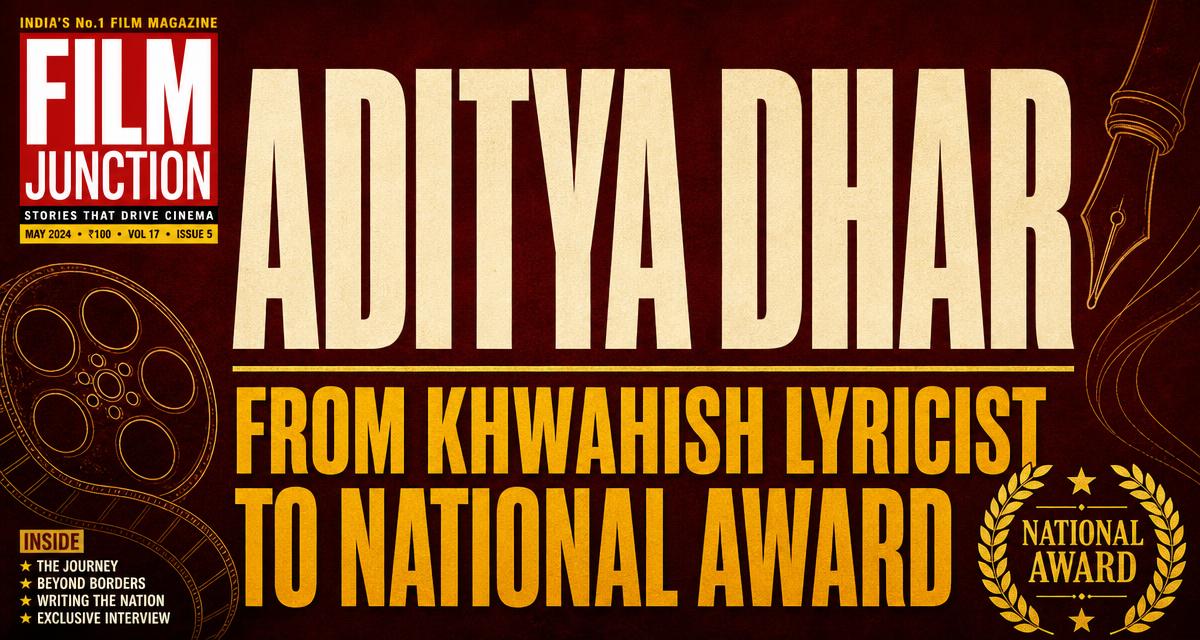
Quick Answer: The lyricist of the 2008 song Khwahish from Haal-E-Dil is Aditya Dhar, the same writer-director who later helmed Uri: The Surgical Strike (2019) and Dhurandhar (2025), winning the National Film Award for Best Direction along the way.
Long before "How's the josh" became a national catchphrase, Aditya Dhar was a young man in Mumbai writing love songs for films nobody remembers today. His name appeared in small print on music album covers, tucked below the names of singers and composers who got the spotlight. Today he is one of Hindi cinema's most bankable filmmakers, a National Award winner, and the creative force behind some of the biggest hits of the last decade.
His story is one of the more compelling underdog arcs in the industry, and it starts not behind the camera but in front of a notepad, hunting for the right words to fit someone else's tune.
Who Is Aditya Dhar
Aditya Dhar is an Indian film director, screenwriter, lyricist, and producer, best known for directing Uri: The Surgical Strike (2019) and Dhurandhar (2025). Born on 12 March 1983 in New Delhi into a Kashmiri Pandit family, he grew up around art and academics, his mother having served as Dean of the Faculty of Music and Fine Arts at Delhi University. Yet his own path to filmmaking was anything but smooth. He struggled with dyslexia as a child, moved between career ideas before settling on cinema, and spent over a decade in the industry's background before ever getting to direct a single frame.
Today he is married to actor Yami Gautam, runs his own production banner, B62 Studios, and is widely regarded as one of the most disciplined writer-directors working in Hindi film. But the road there started with a pen and a page of lyrics.
The Lyricist Years: Writing Words for Other People's Films
Aditya Dhar moved to Mumbai in 2006 to chase a career in filmmaking. Like most outsiders without a film family background, he had to take whatever work came his way, and that meant starting as a lyricist and assistant director rather than walking straight into a director's chair.
His first real break came with Yash Raj Films' Kabul Express (2006), where he wrote lyrics for songs composed by Raghav Sachar. It was a modest entry point, but it got his name onto a big banner's project.
Two years later came the song that Bollybakar readers are searching for today: Khwahish, from the 2008 film Haal-E-Dil. Composed by Raghav Sachar and sung by Shaan, Sunidhi Chauhan, and Raghav Sachar himself, the track carried Dhar's lyrics for a film starring Adhyayan Suman, Amita Pathak, and Nakuul Mehta. Haal-E-Dil itself did not set the box office alight, but the soundtrack, and Khwahish in particular, gave listeners an early sample of Dhar's ability to write emotionally direct, accessible lyrics.
He followed this with lyrics for Daddy Cool (2009) and Phhir (2011), continuing to work with composer Raghav Sachar across several projects. This period was less about stardom and more about learning the machinery of Bollywood from the inside: how a film gets written, scored, shot, and marketed. For a deeper cut on this era, see our companion piece on the full list of songs Aditya Dhar wrote before Uri and Dhurandhar.
Moving From Lyrics to Dialogue and Screenplay
Writing song lyrics naturally pushed Dhar toward the bigger craft of storytelling. He joined veteran filmmaker Priyadarshan as an assistant director and dialogue writer, contributing to Aakrosh (2010) and Tezz (2012). This was a significant shift. Lyric writing demands emotional compression, saying a lot in a few lines set to rhythm. Dialogue writing demands something different: character voice, pacing, and dramatic tension across scenes. Working under an established director like Priyadarshan gave Dhar a masterclass in both.
During this phase, he also wrote the screenplay for the short film Boond (2009), which went on to win a National Film Award, an early sign that Dhar had a genuine gift for structuring a story, not just decorating it with clever lines.
The Setbacks Nobody Talks About
What makes Dhar's story compelling for an authority piece is not just the eventual success, it is the long middle section where nothing worked. He had ambitions to direct a big-budget science fiction project called The Immortal Ashwatthama, which was ultimately shelved. Reports over the years have also mentioned a stolen script and multiple false starts at getting a directorial debut off the ground, first around 2009 and again around 2013.
For close to a decade, Dhar was the guy who wrote good words for other people's films while his own directorial ambitions kept stalling. It is a familiar Bollywood story: talented, hardworking, and repeatedly told no. What separates him from many others who quietly gave up is that he kept writing, kept refining his craft, and stayed ready for the one opportunity that would actually land.
The Uri Breakthrough
That opportunity arrived with Uri: The Surgical Strike, based on India's 2016 surgical strikes response to the Uri terror attack. Dhar wrote the screenplay in a reported twelve days and made his directorial debut with the film in January 2019. It starred Vicky Kaushal, Yami Gautam, and Paresh Rawal, and it became both a critical and commercial phenomenon, grossing over ₹342 crore worldwide against a modest budget.
The film's dialogue, "How's the josh," turned into a genuine cultural moment, repeated everywhere from cricket stadiums to political rallies. More importantly for Dhar's career, the film won him the National Film Award for Best Direction, along with a Filmfare Award, an IIFA Award, and a Zee Cine Award. A lyricist who had spent over a decade writing for other people's projects had, in one film, become one of the most talked-about new directors in the country.
Building an Empire: B62 Studios and Beyond
Success did not make Dhar rush into another project just to cash in. In 2019, he launched his own production house, B62 Studios, along with his brother Lokesh Dhar, named after the number of his childhood home in South Delhi. Under this banner, he contributed as story and screenplay writer on Article 370 (2024), a politically charged drama that continued his interest in stories rooted in India's security and geopolitical landscape.
His most significant recent work is Dhurandhar (2025), starring Ranveer Singh, Akshaye Khanna, Sanjay Dutt, R Madhavan, and Arjun Rampal. The film became the highest-grossing Indian film of 2025, crossing ₹1,354 crore globally, and cemented Dhar's position as a director capable of delivering large-scale, high-stakes cinema on a consistent basis. Read more on how Imtiaz Ali reacted to the Dhurandhar phenomenon and Dhar's own praise for Prabhas as Dhurandhar 2 builds up. B62 Studios has also expanded into other formats, including the Netflix series Baramulla and the film Dhoom Dhaam, showing that Dhar is now building a production house, not just a personal filmography.
Why the Lyricist Background Matters
It would be easy to treat Dhar's lyricist years as a footnote before the "real" career began, but that misses what actually made him a strong director. Writing lyrics under strict meter and rhyme constraints forces a writer to think about economy of language, choosing only the words that carry maximum emotional weight. That same discipline shows up in Dhar's screenplays, which are known for tight, quotable dialogue rather than excess exposition.
His years writing for music directors and singers also gave him an ear for how songs function within a film's emotional architecture, not as standalone tracks but as scene extensions. This is part of why his films tend to use music purposefully rather than as filler between plot points.
Other Bollywood Lyricists Who Became Directors
Aditya Dhar is not alone in making this transition. Hindi cinema has a small but notable list of writers who started with song lyrics and eventually moved behind the camera.
Gulzar is the most iconic example. Long before he became one of the most celebrated directors in Indian film history, he was already a respected lyricist and poet. He went on to direct classics like Mausam, Ijaazat, and Maachis, eventually earning a Dadasaheb Phalke Award for his contribution to Indian cinema, alongside numerous National Awards for both his direction and his lyrics.
Anvita Dutt followed a similar arc in more recent times. She spent years writing lyrics and dialogue for films like Queen, Shaandaar, and Phillauri before making her directorial debut with the Netflix film Bulbbul (2020), a period horror drama that was widely praised for its visual storytelling and feminist lens. She followed it with Qala (2022), further establishing herself as a distinct directorial voice.
Varun Grover is another strong parallel to Dhar. Known for his National Award-winning lyrics in films like Masaan and his writing work on Gangs of Wasseypur and the series Sacred Games, Grover made his feature directorial debut with All India Rank in 2024, a coming-of-age drama that premiered at the International Film Festival Rotterdam before its India release.
What connects all these names is the same pattern seen in Dhar's career: years of disciplined writing work in a supporting role, followed by a leap into direction once the storytelling instincts were fully formed. Lyric writing, in each case, turned out to be a quiet training ground for filmmaking rather than a separate, unrelated skill.
Key Takeaways From Aditya Dhar's Journey
For anyone tracking his career, or for aspiring writers hoping to make a similar transition, a few lessons stand out.
First, there is no shortcut around paying dues. Dhar spent roughly thirteen years working as a lyricist, dialogue writer, and assistant director before his directorial debut. Second, setbacks like a shelved film or a stolen script did not derail him permanently, they simply delayed the timeline. Third, once he got his shot, he was prepared enough to deliver a genuinely accomplished debut rather than a shaky first attempt, which is why Uri still holds up as one of the better-directed Hindi films of its decade.
Frequently Asked Questions
Who wrote the lyrics for the song Khwahish?
The lyrics for Khwahish, from the 2008 film Haal-E-Dil, were written by Aditya Dhar. The song was composed by Raghav Sachar and sung by Shaan, Sunidhi Chauhan, and Raghav Sachar.
Is the Khwahish lyricist the same Aditya Dhar who directed Uri?
Yes. Aditya Dhar began his Bollywood career as a lyricist in 2006 with Kabul Express and went on to write lyrics for Haal-E-Dil, Daddy Cool, and Phhir before becoming a director. He is the same Aditya Dhar who later directed Uri: The Surgical Strike and Dhurandhar.
Who is Aditya Dhar's wife?
Aditya Dhar is married to National Award-winning actor Yami Gautam. The two met while working together on Uri: The Surgical Strike (2019), where she played the role of intelligence officer Jasmine, and got married in a private ceremony in Himachal Pradesh in June 2021. They welcomed their first child, a son, in May 2024. Yami Gautam continues to headline films of her own, most recently winning the National Film Award for Best Actress at the 72nd National Film Awards.
How did Aditya Dhar and Yami Gautam meet?
They met on the set of Uri: The Surgical Strike, Dhar's directorial debut, and kept their relationship private through the film's release and awards run before marrying in 2021. Yami Gautam has since spoken in multiple interviews about how Dhar's discipline as a filmmaker shaped her own approach to picking scripts.
What other songs did Aditya Dhar write before becoming a director?
Aditya Dhar wrote lyrics for Kabul Express (2006), Haal-E-Dil (2008, including Khwahish), Daddy Cool (2009), and Phhir (2011). He also worked as a dialogue writer on Aakrosh (2010) and Tezz (2012).
What was Aditya Dhar's first film as a director?
His directorial debut was Uri: The Surgical Strike in 2019, which won him the National Film Award for Best Direction along with several other honors.
How long did Aditya Dhar work as a lyricist before directing his first film?
He worked in various writing roles, including lyricist, dialogue writer, and assistant director, from 2006 until his directorial debut in 2019, a gap of roughly thirteen years.
Which other Bollywood lyricists later became film directors?
Notable examples include Gulzar, who became one of Indian cinema's most celebrated directors after starting as a lyricist and poet, Anvita Dutt, who moved from writing lyrics for films like Queen to directing Bulbbul and Qala, and Varun Grover, who transitioned from National Award-winning lyric writing to directing All India Rank.
What is Aditya Dhar's production house called?
He founded B62 Studios in 2019 along with his brother Lokesh Dhar. The name comes from the house number of his childhood home in South Delhi.
What is Aditya Dhar's most successful film so far?
Dhurandhar (2025), starring Ranveer Singh, became the highest-grossing Indian film of 2025, collecting over ₹1,354 crore globally.
Final Word
Aditya Dhar's journey from a jobbing lyricist writing tracks like Khwahish to a National Award-winning director who now commands the industry's biggest stars is one of Bollywood's better lessons in patience. It shows that a career built on words, however small the early credits look, can eventually become a career built on entire worlds. For readers who landed here searching for Khwahish's lyricist, the fuller story is this: the same man behind that 2008 love song is now shaping some of Hindi cinema's most significant contemporary films.
Loved this? Send it to a friend on WhatsApp 👇
One tap. Pre-written teaser. They'll thank you for the gossip drop.

Who Is Krish Agrawal? Ida Ali’s Fiancé and Her Film Career
Who is Krish Agrawal, Ida Ali’s fiancé? A verified look at his engineering and research career, Ida’s filmmaking work, and their engagement timeline.
Continue reading