Annu Kapoor Reacts to Tamannaah Bhatia “Dudhiya Badan” Remark
Veteran actor Annu Kapoor responds to backlash over his “dudhiya badan” remark about Tamannaah Bhatia, stating he is ready to apologise personally if she felt hurt and clarifying there was no intention to offend.
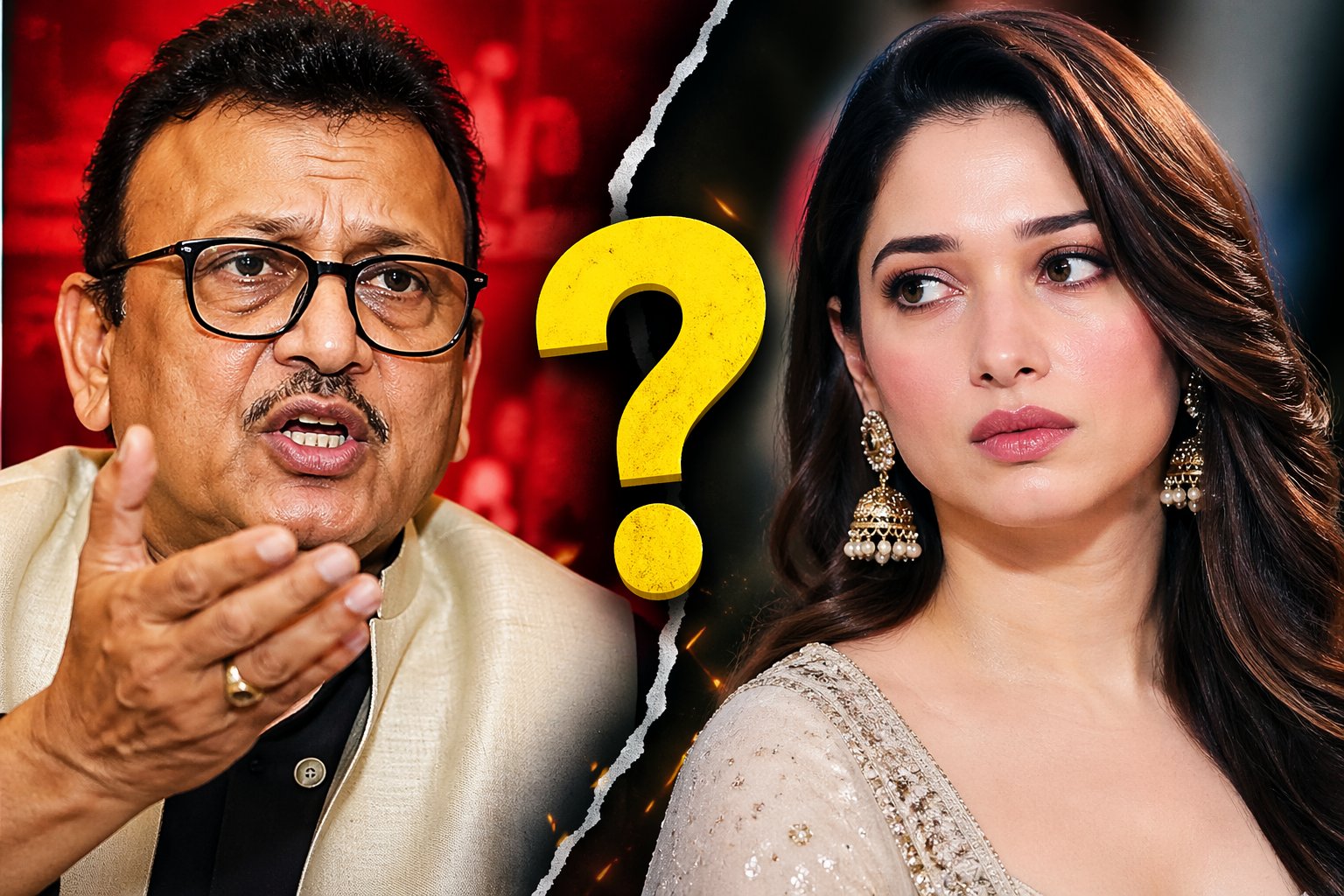
Annu Kapoor Responds to Tamannaah Bhatia “Dudhiya Badan” Row: Says He Will Apologise If She Felt Offended
Veteran Indian actor Annu Kapoor has finally addressed the growing controversy surrounding his “dudhiya badan” remark about actress Tamannaah Bhatia. The comment, which surfaced through a widely circulated clip online, triggered a wave of reactions across social media, with users debating whether the remark was simply poetic expression or an inappropriate choice of words.
As the discussion intensified, Kapoor stepped forward to clarify his stance, insisting that there was no intention to offend the actress. At the same time, he acknowledged the public reaction and expressed willingness to make amends personally if his words had caused discomfort.
The Comment That Sparked the Controversy
The controversy began after a short video clip of Annu Kapoor referring to Tamannaah Bhatia in a descriptive manner went viral. In the clip, Kapoor used the phrase “dudhiya badan,” a poetic expression loosely interpreted as referring to a fair or glowing complexion.
While some viewers saw it as a stylistic, old-school way of speaking, others found it inappropriate, arguing that such descriptions about a female actor in public discourse could be perceived as objectifying or unnecessary.
As the clip spread across platforms, it quickly became a talking point, with debates emerging around:
Language sensitivity in public interviews
The difference between poetic expression and modern-day acceptability
How celebrity statements are clipped and amplified on social media
Some users defended Kapoor, stating that his generation of actors often uses metaphorical or literary Hindi in speech. Others, however, felt that intent does not always override impact, especially in today’s media environment.
Annu Kapoor Breaks Silence on the Backlash
Responding to the growing criticism, Annu Kapoor addressed the issue directly. He clarified that his remarks were not meant to be disrespectful and that he often speaks in a descriptive, expressive style rooted in classical Hindi and Urdu influences.
Kapoor explained that he did not anticipate his words being interpreted in a negative manner or becoming a subject of controversy. However, he acknowledged that once something is said publicly, it is open to interpretation, and he respects how audiences react.
What stood out in his response was his emphasis on accountability. Rather than dismissing the criticism, he expressed openness to apologising if Tamannaah Bhatia personally felt hurt by his comment.
He stated that if she was offended in any way, he would not hesitate to apologise directly and respectfully.
“I Will Touch Her Feet and Apologise,” Says Kapoor
In one of the most widely discussed parts of his response, Annu Kapoor reportedly said that if Tamannaah Bhatia felt hurt by his words, he would “touch her feet” as a gesture of apology.
In Indian cultural tradition, touching someone’s feet is considered a sign of deep respect and humility. Kapoor’s use of this expression was interpreted as an attempt to emphasise sincerity rather than confrontation.
He further reinforced that he has no ego when it comes to admitting mistakes and that respect for women remains central to his values. According to him, there was no intention to demean or objectify Tamannaah in any way.
Instead, Kapoor suggested that the controversy may have stemmed from a misunderstanding of tone and context, rather than any deliberate wrongdoing.
Tamannaah Bhatia’s Response Still Awaited
As of now, Tamannaah Bhatia has not publicly responded to the controversy or Annu Kapoor’s clarification. The silence has further fueled speculation online, with discussions continuing across platforms about whether she will address the matter or choose to move on without comment.
In similar past instances involving celebrities, responses have varied—some choose to directly address such remarks, while others avoid engaging publicly to prevent further amplification of the issue.
Social Media Divided Over the Issue
As expected, social media reactions have been mixed.
A section of users criticised the remark, arguing that public figures need to be more conscious of their language, especially when referring to female actors. Many highlighted that even poetic or traditional expressions must evolve with time and audience sensitivity.
On the other hand, supporters of Annu Kapoor defended him, stating that:
His comment was misinterpreted out of context
He is known for his literary and theatrical style of speech
The backlash is an example of over-scrutiny of every public statement
Some also pointed out that older generations of actors often use metaphorical Hindi expressions that may not always translate cleanly in today’s digital discourse.
The divide reflects a broader ongoing conversation in entertainment circles about how language, intent, and perception interact in the age of viral media.
The Larger Debate: Language, Intent, and Modern Sensibilities
Beyond the immediate controversy, the incident has reignited a larger debate in the entertainment industry.
Public figures, especially actors and hosts, often walk a fine line between expressive language and social sensitivity. What may once have been considered poetic or harmless can now be re-evaluated under contemporary standards.
Key questions raised by the discussion include:
Should traditional poetic expressions be reinterpreted in modern contexts?
How much does intent matter compared to audience perception?
Do viral clips distort the original tone of a conversation?
Experts in media communication often note that short video clips circulating online can strip context, making statements appear more controversial than they were originally intended.
Annu Kapoor’s Attempt to De-escalate
In his clarification, Annu Kapoor’s tone appeared focused on de-escalation rather than defence. Instead of engaging in confrontation or dismissing criticism, he repeatedly emphasised respect, accountability, and willingness to correct any perceived mistake.
His statement also reflects a broader trend among public figures who now respond quickly to online controversies, often aiming to prevent prolonged backlash cycles.
By offering a conditional apology—based on whether Tamannaah Bhatia herself felt hurt—Kapoor positioned his response as both respectful and non-defensive.
Conclusion: A Case of Interpretation vs Intent
The controversy surrounding Annu Kapoor’s “dudhiya badan” remark highlights the growing sensitivity around language in public discourse, especially in the entertainment industry where statements are instantly magnified.
While Kapoor insists his comment was not meant to offend and stems from a poetic style of expression, public reaction shows how interpretation can vary widely depending on context, tone, and evolving cultural norms.
What remains clear is that Kapoor has expressed willingness to resolve the matter respectfully and directly if needed. Whether Tamannaah Bhatia chooses to respond or not, the incident has already sparked a broader conversation about language, respect, and responsibility in celebrity communication.
In an age where every word can go viral within minutes, this episode serves as another reminder that intent and impact are often judged differently by audiences—and both matter in shaping public perception.
Loved this? Send it to a friend on WhatsApp 👇
One tap. Pre-written teaser. They'll thank you for the gossip drop.

Who Is Krish Agrawal? Ida Ali’s Fiancé and Her Film Career
Who is Krish Agrawal, Ida Ali’s fiancé? A verified look at his engineering and research career, Ida’s filmmaking work, and their engagement timeline.
Continue reading