Bollywood’s Most Unlikely Superstars: The Stars Who Broke Every Rule
They didn’t have famous surnames, industry connections, or conventional looks. What they had instead was persistence, timing, and a presence Bollywood couldn’t ignore forever. These are the stories of the stars nobody expected — and the industry that took too long to notice them.
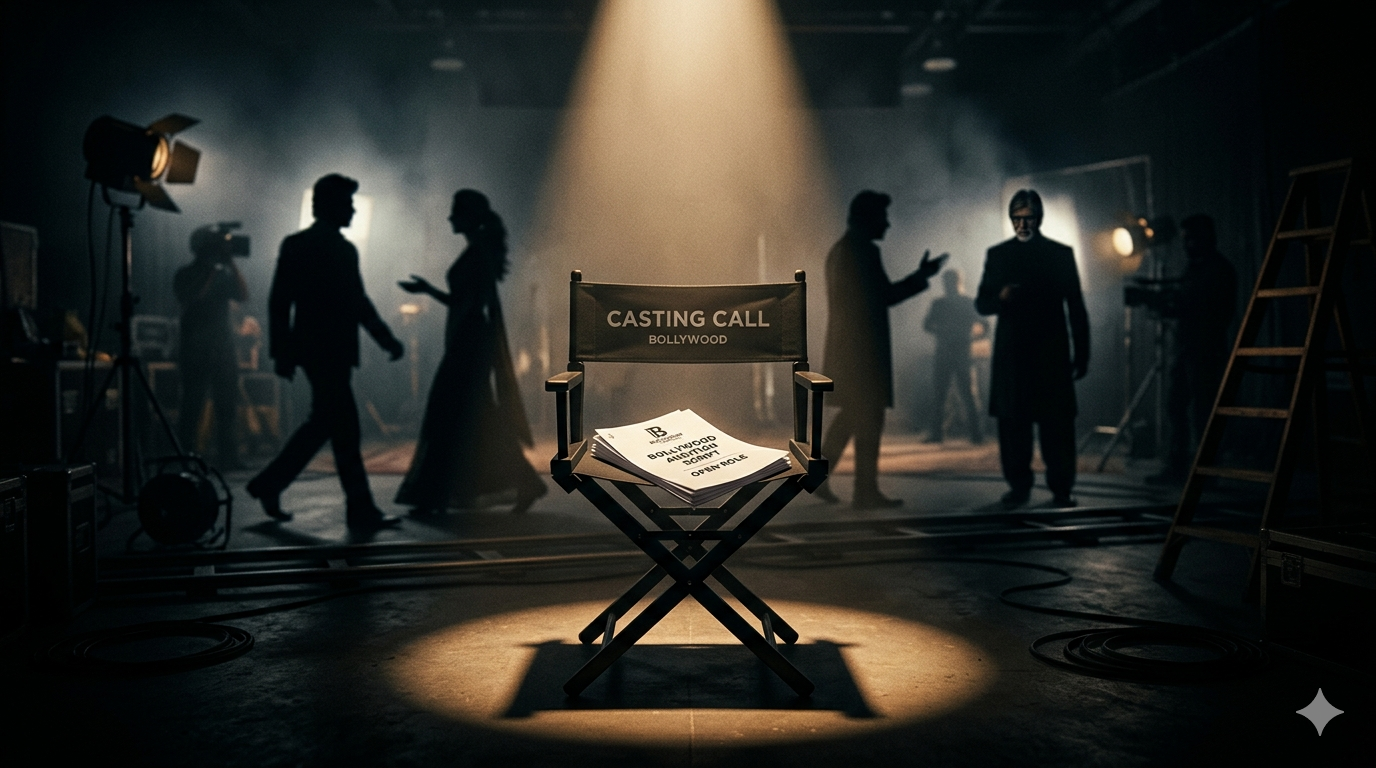

Bollywood has always worshipped bloodlines, six-packs, and star surnames. And then, against all its own logic, it fell head over heels for a bus conductor, a watchman, a factory worker, a farmer’s son, and a woman every producer had written off as a jinx.
There is a version of Bollywood that runs on dynasties. Son of legend becomes legend. Daughter of icon gets the cover shoot on day one. The scripts arrive before the acting classes do. It is a closed circuit, and it hums along beautifully for those already inside it. But every so often, someone slips through a side door the industry forgot to lock, and the whole machine has to reckon with what it missed. These are those people.

Rajinikanth
From Bus Conductor to Mythology
WAS Bangalore bus conductor, coolie, carpenter’s apprentice → NOW India’s most mythologised screen icon
If you needed a scriptwriter to invent the origin story of a god, they might have settled on exactly this: a young man from a modest Marathi family, collecting bus tickets on the streets of Bangalore, dreaming of something he had no roadmap for. Rajinikanth, born Shivaji Rao Gaekwad, took every job the city offered before acting found him. He worked as a coolie, carried wood for a carpenter, punched tickets in silence. Then, on a whim, he enrolled in the Madras Film Institute.
“He didn’t just become a star. He became a religion.”
The industry that saw him in 1975 saw a dark-skinned, unconventionally built man with no pedigree. Tamil cinema was not exactly waiting with open arms for someone like him. What it got instead was the most distinctive screen presence the subcontinent has ever produced. The slow cigarette flip. The sunglasses catch. The collar adjustment that became a signature more copyrighted than any logo.
Decades later, his fans do not merely watch his films. They celebrate them.
Temples exist. Milk baths for his cut-outs. No film school teaches what he did.
He simply reinvented what charisma could look like.
Nawazuddin Siddiqui
The Long Road to Recognition
WAS Farm worker, watchman, pharmacy chemist in UP → NOW The benchmark for acting in Indian cinema
Between 2002 and 2005, Nawazuddin Siddiqui was so broke he could not pay rent. He asked a senior from the National School of Drama if he could sleep on his couch. The deal was he would cook meals in exchange.
This is the same man whose films have since screened at Cannes eight times. The same man critics now describe as a one-person acting masterclass.
He had come a long way by then already. From a farming family in Budhana, Uttar Pradesh, he had worked as a watchman, as a chemist, before theatre and NSD reshaped his direction entirely. Bollywood did not receive him warmly. He had what is called an unconventional face, which in the industry’s language is code for: not what we are looking for.
For years he floated through blink-and-miss roles. He walked past the camera in Sarfarosh. He appeared in Munnabhai MBBS and was hardly noticed. Then Anurag Kashyap gave him Gangs of Wasseypur, and the mask came off.
“He walked onto the Kahaani set and the casting director had to remind him he wouldn’t be playing a beggar this time.”
That story alone should be pinned to every audition room door in the country.
Pankaj Tripathi
The Late Arrival Who Stayed
WAS Farmhand, hotel kitchen worker, Patna student-union man → NOW Two National Awards, the internet’s favourite face
Pankaj Tripathi studied under a tree until Class V because his village in Gopalganj, Bihar, had no school building. His mother tongue was Bhojpuri. He did not learn to speak Hindi until he moved to Patna.
His father, a farmer and priest, wanted him to become a doctor. Instead, the boy who had been performing in Chhath Puja nataks since age 13 decided that acting was the only life worth having.
He applied to the National School of Drama twice and was rejected both times. His hotel management diploma was not considered a graduation degree. So he enrolled in a regular graduation course, finished it, and applied a third time. He got in. He graduated in 2004, moved to Mumbai, and for the next eight years played gangsters and thugs in roles so small even the credits omitted his name.
“My struggle was not about hunger or homelessness. It was about knowing I had something, and not being given the room to show it.”
Gangs of Wasseypur changed that arithmetic. Then Mirzapur made him a household name. Then Stree, then Mimi, then Newton. Today, directors write his physical mannerisms into scripts before they have even approached him for the role.
Irrfan Khan
AC Mechanic to Hollywood’s Favourite Indian
WAS Aspiring cricketer, part-time AC repairman in Bombay → NOW Padma Shri, National Award, Cannes, Oscars, and immortality
He could not afford the travel to play in the CK Nayudu Trophy, the tournament that might have made him a cricketer. So cricket became a road not taken, and acting, which his family neither understood nor encouraged, became the road. He bluffed his way into the National School of Drama application, listing plays he had never performed in. NSD saw through the bluff and accepted him anyway.
In Bombay, he repaired air conditioners to survive. One of the houses he visited to fix a unit happened to be Rajesh Khanna’s. The irony of a future legend servicing the home of an old legend is the kind of detail fiction editors would cut for being too neat. He spent years in television, in roles that paid the bills but never the dues. His first credited film appearance was in Mira Nair’s Salaam Bombay, and then it was cut from the final edit.
“He had the ability to say more with a held breath than most actors do with a soliloquy.”
What arrived eventually was something Indian cinema had no category for: a man who could hold his own against Ang Lee in Life of Pi, against Danny Boyle in Slumdog Millionaire, and still make a Hindi Medium audience laugh and weep within the same half-hour. He refused the Bollywood hero template at every turn. No six-pack reveals. No item numbers. Just that face, those eyes, and a stillness that made the camera lean in. When he died in 2020 at 53, the industry realised it had squandered about a decade of him by not knowing what to do with him.
Johnny Lever
Comedy from the Margins
WAS School dropout at Grade 7, street hawker, Hindustan Unilever factory hand → NOW 300+ films, Bollywood’s first stand-up icon
He sold pens on the streets of Bombay by impersonating Bollywood stars. Think about that image for a moment. A teenage boy from Dharavi, no education, no connections, no safety net, pulling crowds on the pavement by doing Amitabh Bachchan impressions while trying to move stationery.
His father worked in a factory. His family had six children. He dropped out of school after Grade 7 because there was simply no money to continue.
He got a job at the Hindustan Lever factory alongside his father, and it was there that a union leader watched him mimic senior officers at a company function and gave him a nickname that would follow him for life: Johnny Lever.
When Sunil Dutt caught one of his stage shows, he offered him a film. One film led to another. The comedy cassette Hansee Ke Hungame turned him into a household name before he had even found his footing in cinema.
“He could make a whole auditorium convulse without saying a word. Just his face arriving on screen was enough.”
At 13, Lever has said, he once stood on railway tracks intending to end it all. He stepped back, thinking of his family. He went on to appear in over 300 films. He is widely regarded as the architect of what Indian stand-up comedy would eventually become. Not bad for a boy who was selling pens when he was supposed to be in school.
Vidya Balan
The Heroine Bollywood Didn't Recognise
WAS Branded unlucky, dropped from a dozen films, body-shamed by producers → NOW Rewrote what a Bollywood leading woman could look like
A Tamil producer who had cast her in a film had her horoscope read by an astrologer and concluded she was bad luck. When her parents came to confront him, he asked, in front of them: does she even look like a heroine? Vidya Balan did not look at herself in a mirror for six months after that. She had just been dropped from a dozen films in a row after a Malayalam project fell apart and producers decided the collapse was her fault.
She auditioned 74 times for Parineeta. She appeared in TV serials, sang in the background of music videos, filmed nearly 90 advertisements, and kept going back. She was not particularly tall. She was not reed-thin. She refused to become the version of herself the industry wanted. The industry made her pay for that refusal for years.
“I would go to bed crying almost every night. And then wake up the next morning and be right back there.”
Parineeta finally got made. What followed was Lage Raho Munna Bhai, Paa, Ishqiya, The Dirty Picture, Kahaani, and enough Filmfare trophies to build a small shelf. She did not just succeed. She changed the entire conversation about what a female-led Bollywood film could be.
The faces that came after, the Tabus, the Shefali Shahs, the Rajshri Deshpandes, all had a little more room because of what Vidya made.
Boman Irani
Waiter & Bakery Boy to Bollywood’s Everyman
WAS Taj hotel room service, ancestral bakery, street photographer → NOW One of Hindi cinema’s most beloved character actors
He waited tables at the Taj Mahal Palace Hotel. He worked room service for over a year. He ran shifts at his family’s bakery. He sold photographs on the street for twenty-five rupees apiece. Boman Irani spent the bulk of his early life in professions that had absolutely nothing to do with his eventual calling. He came to professional theatre relatively late, and to films later still. His first notable Bollywood role arrived in 2003, in Munna Bhai MBBS, when he was already in his mid-forties.
What happened next is the stuff that makes late bloomers mythological. 3 Idiots, Don, Happy New Year, Jolly LLB, Chennai Express, and dozens more. A face so distinctive, a voice so precise, a range so wide that directors began writing characters specifically for him.
He became indispensable before most people in the industry had noticed he had arrived.
The thing Bollywood keeps forgetting
Every few years, the industry congratulates itself on discovering someone extraordinary. What it rarely acknowledges is how long it spent not discovering them. Nawazuddin cooked meals for a couch to sleep on.
Pankaj applied to NSD three times. Irrfan fixed air conditioners and waited. Vidya stopped looking in mirrors. Johnny sold pens on pavements. Rajinikanth punched bus tickets in Bangalore.
The talent was never the problem.
The problem was that the industry had a very specific idea of what a star should look like, and these people did not match the description.
When they finally got through anyway, they did not just succeed. They reset the definition entirely.
And somewhere right now, the next one of them is waiting for a door to open.
Also Read: https://bollybakar.com/article/when-marketing-budgets-become-bigger-than-film-budgets
Also Read: https://bollybakar.com/article/the-return-of-mass-cinema-why-larger-than-life-bollywood-films-are-back
Also Read: https://bollybakar.com/article/is-luck-the-ultimate-ticket-in-bollywood-ten-times-a-star-said-no-and-handed-someone-else-a-legend
For more news, trivia, juicy bollywood gossips, subscribe to the youtube channel
https://www.youtube.com/@bollybakar
Keywords:
Bollywood unlikely superstars, actors who struggled before success Bollywood, Rajinikanth success story, Nawazuddin Siddiqui struggle story, Pankaj Tripathi journey to success, Irrfan Khan early life struggle, Johnny Lever success story, Vidya Balan rejection story, Boman Irani late success Bollywood, Bollywood outsiders success stories, actors without film background Bollywood, Bollywood actors humble beginnings, Bollywood stars who struggled, late bloomers Bollywood actors, Bollywood actors from humble backgrounds, Bollywood success stories, Bollywood actors real life struggles, actors who became stars against odds, Bollywood inspirational actor stories, Bollywood editorial analysis, Bollywood career journeys, actors who became famous late, Bollywood underrated actors success, Bollywood non nepotism success stories, Bollywood actors who broke stereotypes, Bollywood actors without connections, Bollywood stars who proved industry wrong, Bollywood inspirational journeys, Indian actors humble beginnings, Bollywood actors rise to fame, Bollybakr
Loved this? Send it to a friend on WhatsApp 👇
One tap. Pre-written teaser. They'll thank you for the gossip drop.

Who Is Krish Agrawal? Ida Ali’s Fiancé and Her Film Career
Who is Krish Agrawal, Ida Ali’s fiancé? A verified look at his engineering and research career, Ida’s filmmaking work, and their engagement timeline.
Continue reading