When Bollywood Stars Stopped Being Larger Than Life
Bollywood stars once thrived on mystery and distance. In the age of Instagram and PR posts, has constant access quietly killed the magic of stardom?
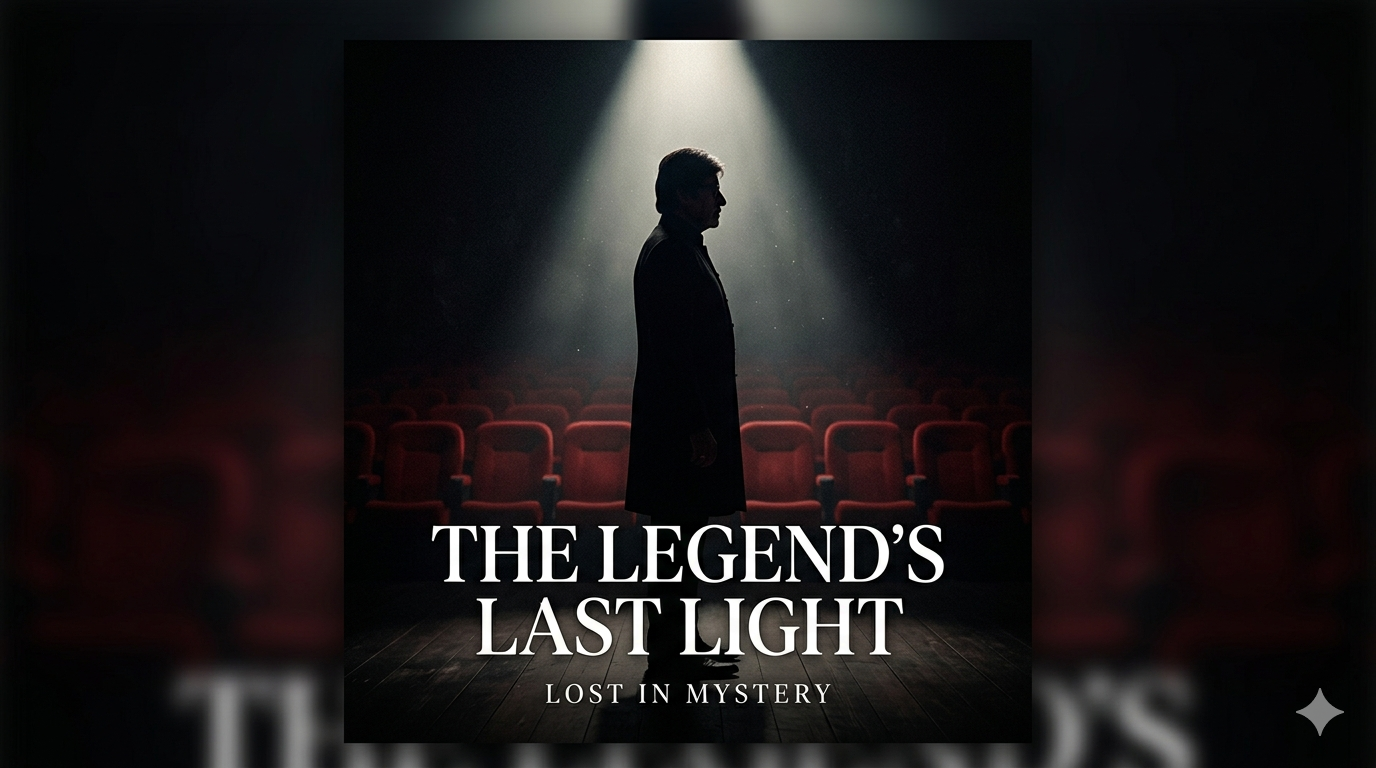
Are Bollywood Stars Losing Their Mystery?
Picture this. It is 1992. Your neighbour's cousin has just returned from a shoot in Bombay and he is sitting in someone's drawing room with fifteen people around him.
Someone's mother has made chai. Someone's uncle has pulled up a chair from the dining table. And this cousin, who works in some peripheral capacity on film sets, is about to tell everyone what Amitabh Bachchan is actually like in real life.
The room goes quiet.
Not the polite quiet of people being courteous. The electric quiet of people who genuinely cannot believe they are about to receive information this precious.
One woman puts her cup down. A child stops fidgeting. And for the next twenty minutes, everybody in that room hangs on every word, because this is as close as any of them will ever get to knowing what it is actually like to be in the same space as the man.
That was the economy of Bollywood stardom once. Information was scarce.
Access was impossible. And the distance between a star and the audience was so vast, so carefully maintained, that even second-hand stories about them felt like contraband.
Now open Instagram.
What the Black and White Photographs Knew
There is a photograph of Rajesh Khanna from somewhere in the early 1970s that has always said more than any interview he ever gave. He is leaning against a car. The collar of his shirt is open just enough. He is looking slightly past the camera, not at it, and the expression on his face suggests he is thinking about something that you will never be told. The photograph gives you everything and nothing simultaneously, and that tension is exactly why you cannot stop looking at it.
The photographers of that era understood something that nobody has bothered to explain to the content teams of 2026. A star is not a person you know. A star is a person you want to know. The moment you close that gap completely, the wanting disappears, and the wanting is the entire product.
Rajesh Khanna's stardom was so overwhelming in its peak years that women wrote letters in blood. Thousands of them. They married his photographs. They named their children after characters he played. This was not rational behaviour and nobody claimed it was. It was the logical endpoint of a carefully constructed unknowability that his handlers, and he himself, maintained with something close to religious discipline. He never fully broke character in public. Not once. The Rajesh Khanna that existed in people's imaginations was always slightly more than the one standing in front of them, and he made sure it stayed that way.
Try maintaining that particular magic when your most recent Instagram post is a boomerang of you spilling coffee on yourself captioned with a laughing emoji.
The Stardust Generation
If you grew up in India in the 1980s or early 1990s, you will remember what it felt like to get your hands on a film magazine. Stardust, Filmfare, Cine Blitz.
These were not casual reading material. They were studied. Reread. The pages went soft at the corners from handling. You read the same interview three times looking for things you might have missed the first two.
And the interviews themselves were extraordinary because of how little they actually revealed. A star would give 2000 words to a journalist and at the end of it you would know roughly as much as you did before, but you would feel like you had been given something. The craft was in the withholding dressed up as disclosure.
Sridevi talking about her diet but deflecting every question about her personal life with a smile that suggested the personal life was far more interesting than she was letting on.
Madhuri Dixit answering questions about her favourite colour and her mother's cooking while an entire nation quietly went mad trying to figure out who she was actually in love with.
The not knowing was the conversation.
For years. Decades, in some cases.
Now a publicist sends out a press release by 9 AM and the speculation is over before lunch.
Shahrukh and the Last of the Old Magic
Shahrukh Khan is perhaps the most interesting case study in what happened to Bollywood stardom as the world changed, because he managed the transition better than almost anyone and still could not escape the fundamental problem.
In his peak years, Shahrukh maintained a very particular kind of mystique.
He talked constantly, yes, he was one of the most interviewed people in the country, but he talked in a way that somehow never made you feel like you actually had him.
He was too many things at once. Too witty to be simple. Too self-aware to be caught. Too contradictory to be summarised.
Every interview left you with more questions than you arrived with, and that was a skill, not an accident.
Then came social media. And even Shahrukh, who understood the performance of stardom better than almost anyone alive, could not quite figure out how to be Shahrukh Khan on a platform designed for ordinary people to share ordinary moments.
The intimacy that Twitter and Instagram demanded was fundamentally at odds with the architecture of the persona he had spent thirty years building.
You cannot be simultaneously the king of romance that a billion people projected their feelings onto and also the guy posting memes about Monday mornings.
Nobody can. That is the trap and it has closed around the entire industry.
The PR Post and the Death of Believability
There is a specific kind of content that has become so common that the audience has developed an almost allergic response to it.
You know the one.
The photograph taken by a professional photographer who is being paid but not credited, in lighting that is technically natural but suspiciously perfect, of a star looking thoughtfully at something just off camera.
The caption will be either a motivational quote attributed to nobody in particular or an extremely casual sentence that has been rewritten six times to sound like it was typed in thirty seconds. The location tag will be somewhere aspirational. The first comment will be from another verified celebrity leaving a fire emoji.
The audience does not dislike this content because they are cynical. They dislike it because they remember, consciously or not, what it felt like to believe. They remember the version of fandom where the performance was good enough to lose yourself in.
And this content, which tries very hard to manufacture that feeling, only succeeds in reminding everyone how manufactured it all is.
The machinery has become visible and once you can see the machinery you cannot unsee it.
The Multiplex Memory
Here is something that gets forgotten in conversations about social media and overexposure. The magic of a Bollywood star was not just constructed off screen. It was constructed on screen, in specific conditions that no longer reliably exist.
Think about watching Dilwale Dulhania Le Jayenge in a single screen cinema in 1995. The hall is full. The sound system is too loud and slightly distorted. The man next to you is eating something that smells aggressively of spices. And then Shahrukh Khan appears on screen with his arms open on that train platform and the entire hall reacts like a single organism. People cry. People whistle. People shout things at the screen. You are not watching a film.
You are participating in a collective hallucination, and the star at the centre of it is elevated by everyone in that room simultaneously to something beyond ordinary human scale.
That experience trained an entire generation to feel a particular way about particular faces.
And the faces understood their responsibility. They behaved, on screen and off, like people who existed at that elevated frequency. They dressed for it. They spoke for it. They protected it.
The tragedy of where things stand now is not that the stars are less talented. Many of them are extraordinarily talented. It is that the ecosystem which turned talent into mythology has been casually dismantled by the same people who benefited most from it.
What Aamir Understood That Others Did Not
Aamir Khan is not on social media in any meaningful way. He does not post gym videos. He does not do Instagram lives. He does not collaborate with lifestyle brands on content about his morning routine.
He shows up for his films and then largely disappears, and the effect of this, in the current landscape, is that he moves through the industry like a figure from a different era, carrying an aura that his peers, despite their talent and their follower counts, simply cannot replicate.
When Aamir Khan says something in an interview, people read it twice. When he announces a film, it is news in a way that announcements from more visible actors simply are not. He has protected something that most of his contemporaries have given away for free, and the value of what he held onto becomes more obvious every year as the returns on visibility continue to diminish for everyone else.
The Distance Was Never Cruelty
The distance that old Bollywood maintained between stars and audiences was not snobbery, even when it looked like it. It was a gift. It gave people somewhere to put their imagination.
It gave fans the room to construct a version of their favourite star that was personal to them, that existed in the space between what was shown and what was withheld. That private, constructed version was often more powerful than any reality could have been, and the stars who understood this protected the space it required.
What social media asked these stars to do was collapse that space entirely. To be present everywhere, at all times, in all conditions, accessible and knowable and just like everyone else. And they obliged, because the pressure was enormous and the short term rewards were real.
But fandom built on total access is a fundamentally different thing from fandom built on longing. One of them fills your engagement metrics. The other one gets women to name their children after your characters.
The stars are not less than they were. But the distance is gone, and the distance, it turns out, was doing more work than anyone gave it credit for.
It was holding the whole dream together. And without it, even the most talented, most charismatic, most genuinely extraordinary people in the industry are just very attractive humans with good lighting and a content calendar.
And that, for a culture that once turned actors into gods, is a very long way to fall.
Also Read: https://bollybakar.com/article/when-marketing-budgets-become-bigger-than-film-budgets
Also Read: https://bollybakar.com/article/the-return-of-mass-cinema-why-larger-than-life-bollywood-films-are-back
Also Read: https://bollybakar.com/article/is-luck-the-ultimate-ticket-in-bollywood-ten-times-a-star-said-no-and-handed-someone-else-a-legend
For more news, trivia, juicy bollywood gossips, subscribe to the youtube channel
https://www.youtube.com/@bollybakar
Keywords:
bollywood stars mystery, bollywood stardom decline, bollywood stars social media, are bollywood stars losing aura, rajesh khanna stardom mystery, amitabh bachchan stardom era, shahrukh khan stardom analysis, aamir khan mystery bollywood, bollywood celebrity overexposure, social media killing stardom, bollywood PR culture, instagram bollywood celebrities, bollywood fame evolution, old bollywood vs new bollywood, bollywood celebrity culture, stardust magazine era bollywood, bollywood fan culture india, bollywood superstardom decline, bollywood stars accessibility, indian cinema stardom change, bollywood nostalgia stars, celebrity aura bollywood, why bollywood stars not larger than life, bollywood fame before social media
Loved this? Send it to a friend on WhatsApp 👇
One tap. Pre-written teaser. They'll thank you for the gossip drop.
Who Is Krish Agrawal? Ida Ali’s Fiancé and Her Film Career
Who is Krish Agrawal, Ida Ali’s fiancé? A verified look at his engineering and research career, Ida’s filmmaking work, and their engagement timeline.
Continue reading