Are Pakistani Influencers Being Hunted Online?
From Kanwal Aftab to Imsha Rehman, Pakistani influencers keep facing leaked video controversies. Is this a privacy crisis or a targeted attack?
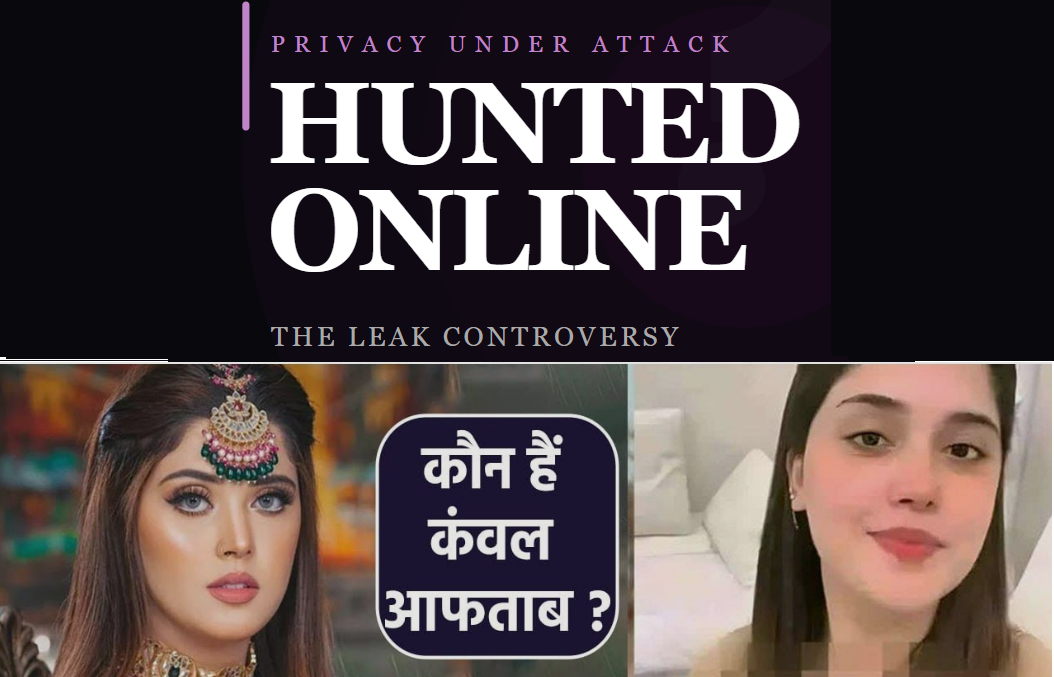
After Kanwal Aftab, Are Pakistani Influencers Being Hunted Online?
It starts the same way every single time.
A name begins trending. The searches spike. Screenshots start flying across WhatsApp groups before most people have even had their morning chai. And within hours, someone who built their entire career on being likeable, relatable and family-friendly is suddenly at the centre of something that has nothing to do with any of that.
This time the name is Kanwal Aftab.
The Lahore-based creator, who has spent years building one of the most wholesome feeds on Pakistani social media, woke up to find herself in the middle of a controversy that is becoming disturbingly familiar. A purported private video linked to her name began circulating across platforms, spreading with the kind of speed that the internet reserves for exactly this type of content. Whether the clip is real, edited, fabricated or entirely AI-generated remains unverified. That detail, as always, came too late to stop the wildfire.
The Woman Behind The Controversy
To understand why this particular story hit so hard, you need to understand who Kanwal Aftab actually is to her audience.
She is not a provocateur. She is not someone who courts controversy for clicks. Her content revolves around her husband Zulqarnain Sikander, their daughter, their home, their everyday life. The kind of content that makes people feel warm about the internet rather than exhausted by it.
She has built her following the slow, honest way, one family video at a time, and that audience trusts her in the way audiences only trust creators who have never given them a reason not to.
Which is precisely why the alleged video spread as fast as it did. The gap between her public image and what was being claimed was so enormous that curiosity got the better of people before their better judgment could catch up. That gap, that contradiction between who someone appears to be and what they are being accused of, is the engine of every viral controversy of this kind. The more wholesome the image, the bigger the explosion when something like this surfaces.
And the people who create and circulate this content know that perfectly well.
This Has Happened Before
Here is the part that should make everyone uncomfortable. This is not Kanwal Aftab's first time here.
Last year, a similar alleged video surfaced with her name attached to it. It was never confirmed. The trolling happened anyway. The commentary happened anyway. The damage to her reputation happened anyway. She navigated it, rebuilt, continued, and here we are again with a second round of the exact same playbook being run against her.
She is not alone in this pattern either.
Mathira Mohammed, one of the most recognisable faces in Pakistani entertainment, went through her own version of this nightmare when an alleged clip circulated in her name.
Imsha Rehman, a TikTok personality with a genuinely devoted following, faced such severe backlash after a purported video went viral that she did what many people in her position ultimately feel forced to do. She stepped away from social media entirely. Not because she was guilty of anything. Because the noise became unbearable.
These are not isolated incidents anymore. They are a pattern, and patterns have architects.
The AI Problem Nobody Wants To Talk About Loudly Enough
Here is what changed everything and what most of the discourse around these controversies conveniently skips over.
Creating a convincing fake video of a real person no longer requires technical expertise, expensive software or significant time. The tools are accessible, increasingly affordable and alarmingly good. A face can be mapped onto a body that has nothing to do with that person in a matter of minutes.
The result can be convincing enough to fool a casual viewer scrolling at speed, which is exactly how most people encounter this content.
Cybersecurity experts have been raising alarms about this for some time now, but the warnings tend to stay within tech circles while the videos travel everywhere else. What makes it worse is the ecosystem that grows around each controversy.
The moment a name starts trending in this context, dozens of accounts and websites claim to be hosting the alleged video. Most of them are not. They are phishing traps designed to harvest personal data or install malicious software on the devices of people curious enough to click. The influencer becomes the bait. The audience becomes the catch.
So the damage runs in two directions simultaneously. The creator gets their reputation dragged through something that may be entirely fabricated. And the audience, drawn in by gossip, ends up compromising their own digital security chasing a video that probably does not even exist in the form being described.
India Is Not Watching From A Distance
It would be convenient to frame this as a uniquely Pakistani problem but the geography of this particular ugliness does not respect borders.
Indian creators, gaming personalities, television actresses and regional influencers have all found themselves tagged in viral claims of this nature. The mechanics are identical.
A name surfaces. A claim circulates. The verification arrives days later, if at all, by which point the narrative has already done its work. The internet does not issue corrections with the same enthusiasm it issues accusations.
The conversation happening in Pakistan right now about privacy, digital harassment and the weaponisation of a woman's reputation is the same conversation that needs to happen across the subcontinent. Because the targets keep being women. That is not a coincidence. That is a choice being made by the people who create and spread this content, and it says something very specific about what they are trying to do and who they believe is most vulnerable to it.
What Actually Happens To These Women
The thing that gets lost in the noise of trending topics and viral screenshots is the human reality of what these controversies do to the people at their centre.
Kanwal Aftab has a daughter. She has a marriage that she has shared openly with her audience. She has a community of followers who came to her specifically because of the trust she built with them over years. Every single one of those things is put under pressure the moment something like this starts circulating, regardless of whether a single frame of the alleged video is genuine.
Brands get nervous. Collaboration offers quietly disappear. Comments sections turn hostile. Family members start getting tagged. People who have never watched a single video of hers feel entitled to weigh in on her character. And through all of it she is expected to respond in exactly the right way, with exactly the right tone, striking the precise balance between defending herself and not drawing more attention to something she would rather the world forget about.
There is no good way to handle it. There is only surviving it.
The Conversation That Needs To Get Louder
Every time one of these controversies surfaces, there is a brief window where people talk seriously about privacy laws, about AI regulation, about the responsibility of platforms to act faster and more decisively when content of this nature spreads. Then the next trend arrives and the window closes.
Pakistan does not currently have robust enough legal frameworks to prosecute the creation and distribution of AI-generated intimate content. India is still catching up on the same front. The platforms move slowly when the content is generating engagement, and content like this generates enormous engagement, which means there is a structural incentive problem sitting right at the heart of why this keeps happening.
Until that changes, until the law catches up with the technology and the platforms are held genuinely accountable for the speed at which this content travels, the pattern will continue. The names will change. The mechanics will stay the same.
Kanwal Aftab is trending today. Someone else will be trending next month. And the month after that. And every single time, the same questions will be asked, the same debates will flare up briefly, and the same women will be left to rebuild something that should never have been broken in the first place.
The internet has a very short memory. Unfortunately for the people it targets, the damage it does tends to last considerably longer.
Also Read: https://bollybakar.com/article/the-saint-who-inspired-silicon-valley-gets-a-biopic
Also Read: https://bollybakar.com/article/the-return-of-mass-cinema-why-larger-than-life-bollywood-films-are-back
Also Read: https://bollybakar.com/article/is-luck-the-ultimate-ticket-in-bollywood-ten-times-a-star-said-no-and-handed-someone-else-a-legend
For more news, trivia, juicy bollywood gossips, subscribe to the youtube channel
https://www.youtube.com/@bollybakar
Loved this? Send it to a friend on WhatsApp 👇
One tap. Pre-written teaser. They'll thank you for the gossip drop.
Who Is Krish Agrawal? Ida Ali’s Fiancé and Her Film Career
Who is Krish Agrawal, Ida Ali’s fiancé? A verified look at his engineering and research career, Ida’s filmmaking work, and their engagement timeline.
Continue reading