Meenakshi Seshadri, Anu Aggarwal and 90s Actresses Facing Social Media Backlash
Meenakshi Seshadri industry criticism explained: what the 90s actress said, the social media backlash, and the debate over how Bollywood treated her generation.
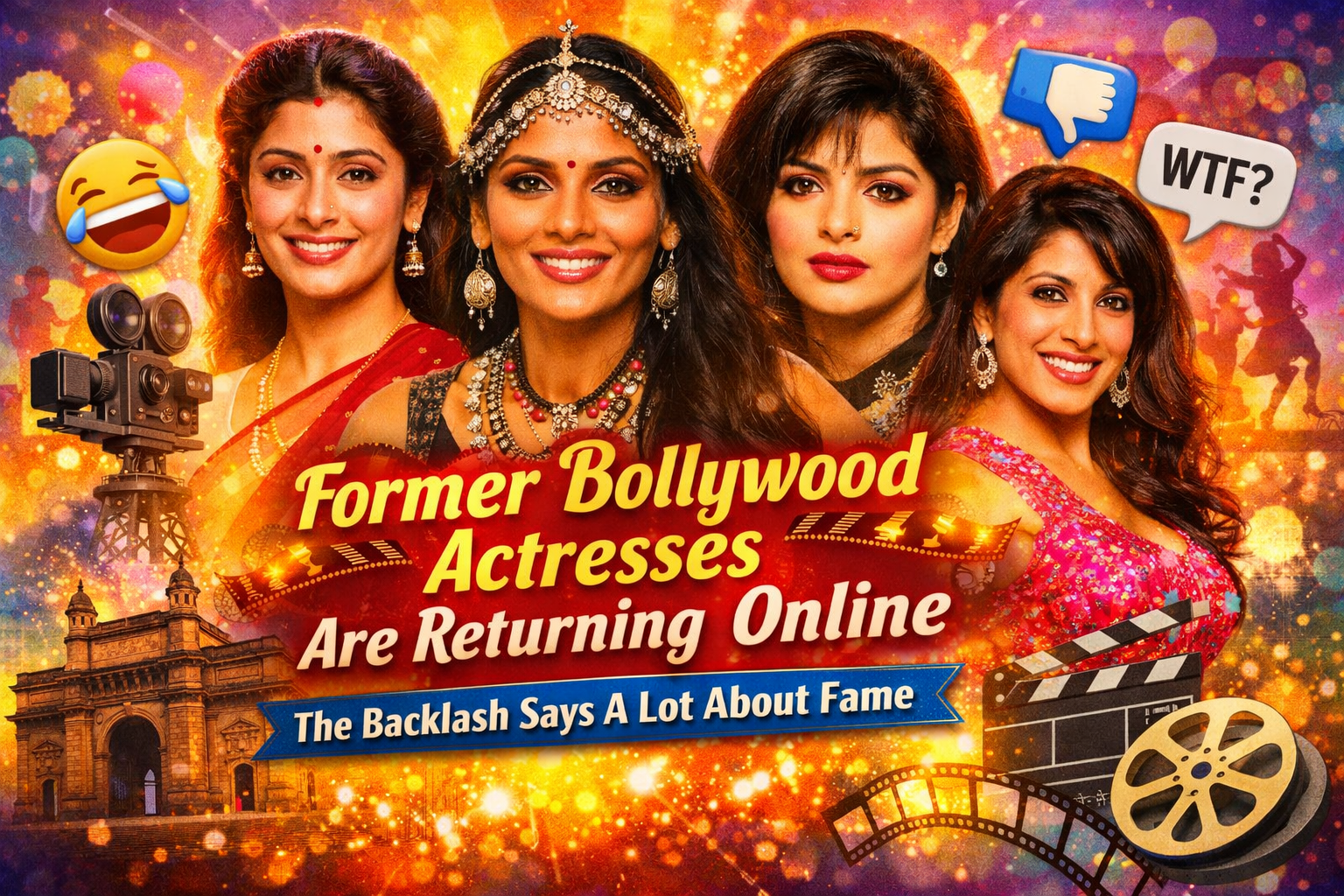
Meenakshi Seshadri Industry Criticism: What She Said And The Backlash
Meenakshi Seshadri's recent industry criticism struck a nerve. The 90s star spoke openly about how Bollywood sidelined its leading women once they hit their 30s, how banner politics kept her off top-tier scripts, and how the same industry now expects her generation to return for nostalgia reels. Here is a plain-English summary before we get to the wider 90s-actress backlash.
Still Showing Up: Former Bollywood Actresses, Social Media Comebacks, and the Backlash That Follows
There was a time when Bollywood stardom had a quiet ending.
An actress would slowly step away. A final film. A few interviews. Then silence. Audiences remembered them through television reruns, magazine covers, and nostalgia that never changed.
That version of fame no longer exists.
Today, relevance lives online. It lives in reels, stories, short videos, and algorithm driven visibility. And some of Bollywood’s former leading ladies are stepping into that space, sometimes gracefully, sometimes awkwardly, but always visibly.
The response has been mixed. Admiration from some. Mockery from others. Memes, trolling, comparisons, and endless then versus now posts.
But beneath the noise lies something more interesting. Actresses from another era refusing to quietly disappear.
Fame Doesn’t Fade Anymore. It Just Moves Online
In the 80s and 90s, relevance depended on:
- Film releases
- Magazine covers
- Television interviews
Today, relevance depends on visibility.
If you are not seen, you are forgotten. That is the reality social media has created. And for actresses whose careers were built on performance and audience connection, social media becomes a new stage.
Not everyone is comfortable with that transition. But some are trying. And that effort itself has become a conversation.
Meenakshi Seshadri and the Unexpected Social Media Debate
For many viewers, Meenakshi Seshadri remains frozen in time. The poised performer from Damini. The dancer from Hero. The expressive presence in Ghayal.
So when she began posting dance reels on social media, the reaction was immediate.
Some viewers appreciated her continuing classical dance performances. After all, she had always been a trained dancer.
Others, however, began circulating clips with captions that leaned toward mockery. Comparisons to her younger performances surfaced. Some comments reduced her presence to age based labels, with a section of users casually calling her "aunty" while sharing her videos.
It reflected a strange contradiction. Audiences celebrated nostalgia, but seemed uncomfortable when nostalgia appeared in the present.
But there was another perspective that quietly emerged.
She was not trying to look younger. She was not recreating old film songs with elaborate production. She was simply dancing, something she had always done, now shared through a modern platform.
And in a social media landscape dominated by fleeting trends, consistency itself becomes notable. She wasn’t chasing trends. She was continuing a personal passion in public view.
That difference matters.
Anu Aggarwal and the Comeback Nobody Expected
Few Bollywood journeys are as unusual as Anu Aggarwal’s.
She became an overnight sensation with Aashiqui. Then came a near fatal accident. A long recovery. A retreat from the industry and public life.
When she returned to social media years later, she did not attempt to recreate her Aashiqui image. Instead, she shared wellness routines, philosophical reflections, and occasional appearances that blended nostalgia with her present identity.
But once again, the internet reacted in predictable ways.
Then versus now comparisons circulated. Clips were shared with captions focusing on appearance rather than journey. Some memes specifically targeted her unconventional outfits, with users joking about her fashion choices and styling. Screenshots of her videos began circulating with humorous captions, often overshadowing the substance of what she was saying.
Yet, what often got overlooked was the courage of re entering public space after decades away. She wasn’t announcing a film comeback. She wasn’t launching a publicity campaign. She was simply reclaiming visibility.
And that alone became a talking point.
Different Comebacks, Different Paths
Not every former actress returning to public visibility is doing the same thing. And that is what makes this shift even more interesting.
Take Mamta Kulkarni, for instance.
Once one of the most talked about actresses of the 90s, Mamta Kulkarni largely disappeared from mainstream public life for years. Her name remained in headlines occasionally, often surrounded by speculation and controversy. When she began appearing again in interviews and discussions, the reaction was immediate.
Some viewers were curious. Others were skeptical. Many simply revisited her films and iconic songs that had once defined her popularity.
But what stood out was how quickly nostalgia returned. Despite years away, the audience still remembered. That, in itself, says something about the staying power of 90s stardom.
Her reappearance did not follow the typical comeback formula. There was no film announcement, no reality show entry. Just conversations, visibility, and the internet rediscovering an old star in a new context.
Then there is Pooja Bedi, whose path has been entirely different.
Instead of leaning purely into nostalgia, Pooja Bedi has reinvented herself through entrepreneurship and public engagement.
From wellness ventures to lifestyle initiatives and startup involvement, she has remained active without depending on film appearances.
Her social media presence reflects this shift. Rather than recreating her past image, she shares updates around her work, ideas, and personal life. The response, interestingly, has been more accepting. Perhaps because reinvention often feels more natural than nostalgia driven returns.
And that contrast highlights something important.
There is no single way to remain relevant. Some actresses reconnect through nostalgia. Others through reinvention. Some through performance. Others through conversation.
But all of them are doing the same thing in their own way. They are staying visible. They are adapting to a new era of fame. And they are choosing to write their own second chapters instead of quietly fading into memory.
The Internet Loves Nostalgia. But Only Carefully Curated Nostalgia
Social media thrives on nostalgia
- Throwback song clips
- Old film scenes
- Vintage interviews
But there is a difference between nostalgia as memory and nostalgia as reality.
Audiences enjoy watching an old clip from the 90s. But when the same actor appears today, the passage of time becomes visible. That discomfort sometimes turns into humor. Sometimes into criticism.
Memes spread faster than thoughtful reactions.
A short clip becomes a joke.
The joke becomes viral. Context disappears.
What remains is a simplified narrative. Former star trying to stay relevant.
But that narrative rarely tells the full story.
The Comeback That Isn’t About Films
When people hear the word comeback, they usually think of:
1. Film announcements
2. OTT series
3. Reality show appearances
But relevance today does not depend solely on screen roles.
Social media itself has become a performance space. Dance videos, interviews, live sessions, collaborations, and storytelling all create presence.
For actresses who once lived in front of cameras, this is a familiar space in a new format.
It may not be a cinema hall. But it is still an audience.
Why Backlash Happens
There are a few reasons why reactions can be harsh.
First, audiences often freeze stars in time. They remember peak fame and youthful images. When reality changes, expectations clash with memory.
Second, social media rewards quick reactions. Humor, sarcasm, and exaggeration travel faster than thoughtful commentary.
Third, there is an unspoken expectation that former actresses should age quietly. When they remain visible, it disrupts that expectation.
Male actors often return as mentors, character actors, or authority figures. Female actors historically had fewer such pathways. Social media allows them to define their own presence, which sometimes feels unfamiliar to audiences.
The Courage of Staying Visible
There is something quietly admirable about returning to public space after years away.
Especially in an industry where actresses have historically faced shorter career spans than male stars. Visibility itself becomes an act of resilience.
Not everyone attempts this. Many former stars remain private. Others appear occasionally. Some avoid social media entirely.
The ones who step forward accept comparisons, criticism, and scrutiny.
They choose visibility over nostalgia.
A New Audience, A Different Perspective
Interestingly, younger audiences often respond differently. Many viewers discovering these actresses today do not carry memories from their peak years. They simply see performers, personalities, and storytellers.
This creates a new dynamic.
Former stars are not just reconnecting with old fans. They are reaching entirely new audiences.
And that may be the most meaningful form of comeback.
The Real Question
Maybe the conversation should not be about whether these actresses are trying too hard.
Maybe the better question is how many are willing to try at all.
Because adapting to a new platform, accepting public scrutiny, and staying visible in a changing industry requires something deeper than stardom. It requires adaptability.
- Meenakshi Seshadri sharing dance reels
- Anu Aggarwal returning with wellness reflections
- Mamta Kulkarni reappearing after years away
- Pooja Bedi building a new identity through entrepreneurship
These are not just nostalgic appearances. They are reminders that performance does not belong to a particular age.
The memes will continue. The trolling may not stop. But neither, it seems, will the desire to remain present.
And perhaps that is the most interesting part of this story. Not the backlash. Not the nostalgia. But the quiet determination of former stars who refuse to fade on anyone else’s timeline.
Also Read: https://bollybakar.com/article/when-marketing-budgets-become-bigger-than-film-budgets
Also Read: https://bollybakar.com/article/the-return-of-mass-cinema-why-larger-than-life-bollywood-films-are-back
Also Read: https://bollybakar.com/article/animal-park-delay-silence-around-ranbir-kapoor-sequel-sparks-buzz
For more news, trivia, juicy bollywood gossips, subscribe to the youtube channel
https://www.youtube.com/@bollybakar
Loved this? Send it to a friend on WhatsApp 👇
One tap. Pre-written teaser. They'll thank you for the gossip drop.
Anjali Arora As Sita: Why The Ramayan Row Won't Die
Anjali Arora plays Sita in Mahakavya Shri Ramayan Katha. The teaser triggered backlash over casting and VFX. Here is what the film is and why people are angry.
Continue reading