Locked Up Reality Shows: Why India Cannot Stop Watching
Lock Upp, The Traitors India, Bigg Boss, The 50 — why confinement is the only reality TV format Indian streamers still trust, and who it works on.
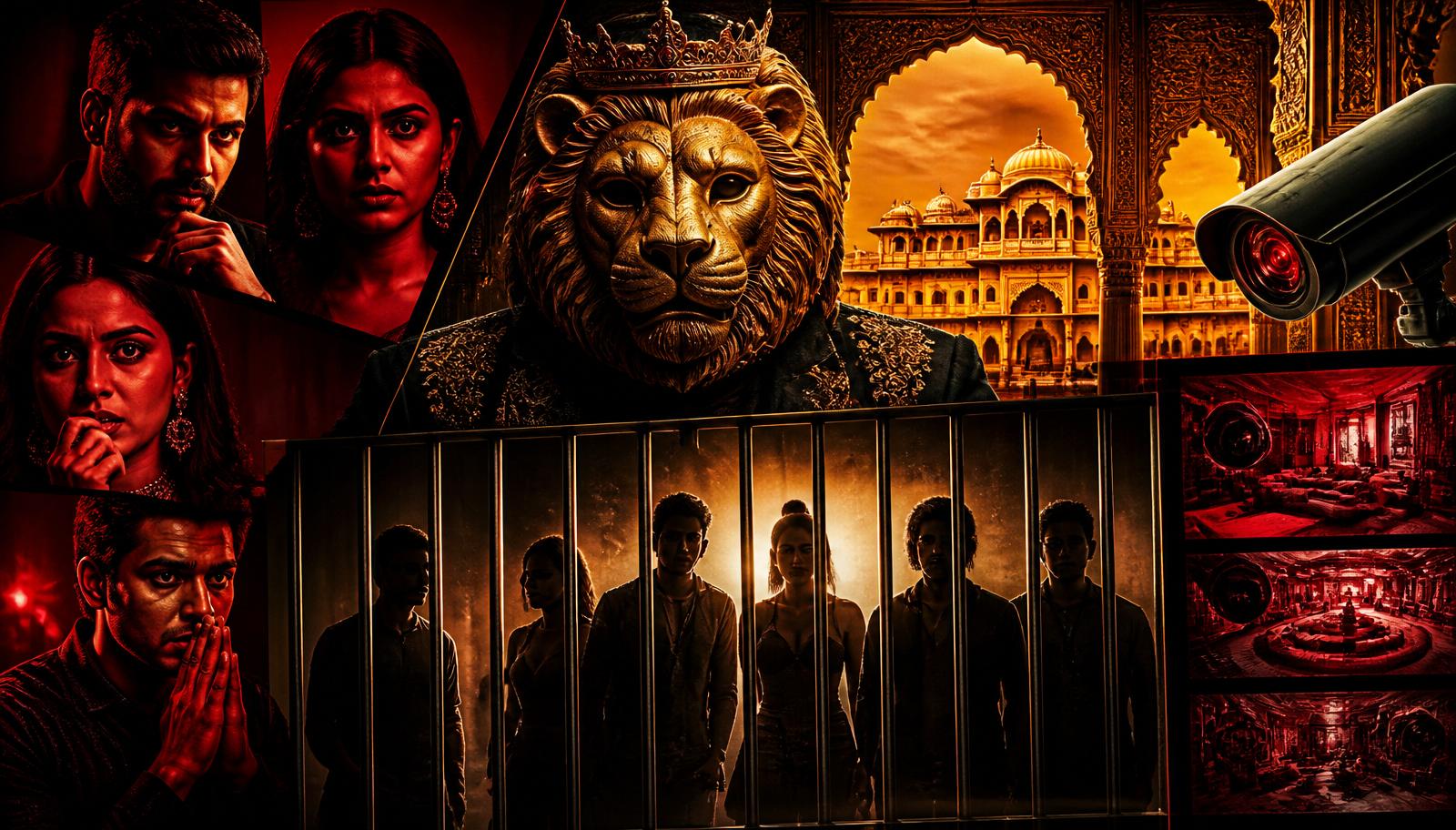
Turn on any streaming app right now and you will notice a pattern. Contestants are not just competing anymore. They are trapped. Locked in a jail. Stuck inside a mysterious headquarters. Marooned in a palace with a masked figure watching their every move. Confined reality shows have quietly become the biggest trend on Indian television and OTT, and once you start noticing it, you cannot unsee it.
Netflix has Lock Upp. Prime Video has Alliance and The Traitors India. Colors TV and JioHotstar have The 50. And holding it all together for nineteen years is the original confinement king, Bigg Boss. Every single one of these formats was born outside India, and every single one has been reshaped into something that feels distinctly local. This piece breaks down what a confined reality show actually is, why five different platforms are betting on the same idea at the same time, and why audiences cannot seem to look away.
What Exactly Is A Confined Reality Show?
A confined reality show strips contestants of the outside world. No phones, no internet, no contact with friends or family, sometimes no clocks or sunlight. They live inside a constructed environment — a house, a jail set, a palace, or a control room — and every interaction is filmed around the clock. The confinement is the engine of the drama. Without an escape valve, small disagreements turn into full-blown conflicts, alliances form out of necessity, and every contestant eventually reveals a version of themselves they would never show on a red carpet.
This is different from a singing contest or a cooking show, where contestants go home after filming and return to their normal lives between episodes. In a confined format, the show never really stops. That is exactly why it works so well for daily content drops on streaming platforms, since producers already have a full house of drama to pull footage from every single day.
Lock Upp On Netflix: The Prison Format That Started The Fire
Lock Upp began in 2022 as a low-budget ALTBalaji and MX Player production hosted by Kangana Ranaut, with stand-up comedian Munawar Faruqui winning the first season. The format placed contestants inside a prison-themed set as inmates, guarded by a jailor, and encouraged them to reveal personal secrets that could change the course of the game.
The show became such a cultural talking point that Netflix picked it up for a second season, subtitled Sach Ya Sazaa (Truth or Punishment). The reboot is hosted by Riteish Deshmukh and Farah Khan, who play the jailers, with fifteen celebrity inmates competing for basic necessities, budgeting their earnings to feed the group for the week, and revealing secrets to earn favour with the hosts and the audience. Produced once again by Ekta Kapoor, critics have described it as a genuine jolt to a genre that had grown repetitive.
Alliance: A Strategy Game Dressed As A Reality Show
Where Lock Upp leans into punishment and confession, Alliance leans into pure strategy. The Prime Video series, produced by Banijay Asia and hosted by Kunal Kemmu, drops sixteen celebrities into a mysterious headquarters run by a computer system the show simply calls the System. Contestants earn points as currency, split into four teams, and must navigate constant resets that force them to rebuild alliances from scratch.
What makes Alliance stand out is its release strategy. Instead of a weekly drop, new episodes arrive daily at noon across a six-week run spanning forty-two episodes. That daily cadence keeps the show constantly present in conversations and on social media, since fans do not have to wait a week to see how a betrayal plays out. Reviewers have pointed out that Alliance and Lock Upp together represent a real challenge to the dominance of Bigg Boss, precisely because they experiment with format mechanics that Bigg Boss has never bothered to touch.
Bigg Boss: The Original That Never Left
None of this trend exists without Bigg Boss, the Indian adaptation of the Dutch Big Brother format, which has run for nineteen years across Hindi and several regional languages. Housemates live under constant surveillance, cut off from television, phones, and the internet, competing in tasks for immunity and facing weekly nominations and evictions. Its longevity is remarkable by any television standard, and it remains the benchmark every new confined show gets compared against.
That same longevity is also its weakness. Critics have started calling the format templatised, arguing that after nearly two decades the tasks, the fights, and even the diary room confessions have become predictable. This is exactly the gap that Lock Upp, Alliance, and The Traitors India are trying to fill — borrowing the same core idea of confinement while introducing new rules Bigg Boss has never adopted. For a longer look at how the genre evolved, see our take on how Indian reality TV changed from family nights to Twitter fights.
The Traitors India: Confinement Meets Social Deduction
The Traitors India took a completely different route into the confined format. Based on the Dutch series De Verraders, the show flew twenty contestants to Suryagarh Palace in Jaisalmer, Rajasthan, and handed hosting duties to filmmaker Karan Johar. A small group of contestants are secretly appointed as Traitors by the host, and every night this group meets in secret to eliminate one player. The remaining contestants, called Faithfuls, must figure out who among them is lying and vote them out during a group gathering known as the Round Table.
The appeal here is different from Lock Upp or Alliance. There is no physical hardship or scarcity built into the game. Instead, the tension comes entirely from paranoia and performance, since any contestant could be secretly working against the group. One reviewer memorably described the experience as watching Bigg Boss go to finishing school — the show trades chaos for a more polished, psychologically driven kind of drama, all while still trapping contestants inside a single, isolated location for the run of the show.
The 50: Scaling Confinement To An Extreme
If the other shows on this list confine a dozen or so people, The 50 confines fifty. Adapted from the French format Les Cinquante through its American iteration Los 50, the Indian version places fifty celebrities, reality veterans, influencers, and digital creators inside a palace-style set in Mumbai, referred to on the show simply as the Mahal. Hosted by Farah Khan, the format removes the usual celebrity host figure from the game itself and replaces it with a masked authority known as the Lion, who issues challenges and enforces the lack of conventional rules.
Unlike a standard elimination show, The 50 revolves around influence and shifting political dynamics rather than physical tasks alone. With fifty personalities competing for space, alliances, and a cash prize, the sheer scale of the cast means the show can sustain daily drama simply through the math of that many strong personalities sharing one house. It streams on JioHotstar alongside Colors TV.
Why Every One Of These Shows Is A Western Import
It is worth sitting with the fact that not a single major confined reality show currently airing in India was originally conceived here. Bigg Boss traces back to Big Brother, created in the Netherlands by Endemol. The Traitors India is a direct adaptation of the Dutch De Verraders, which also spawned hit versions in the United Kingdom and the United States. The 50 descends from the French Les Cinquante by way of the American Los 50. Even Lock Upp and Alliance, while more loosely inspired than direct remakes, borrow heavily from the confinement and social-strategy mechanics that Big Brother and Survivor popularised decades ago.
This is not unique to India. Format licensing has been a global business for years, with companies like Banijay and Endemol Shine selling the rights to proven show formats to broadcasters and streamers around the world. What is unique right now is how quickly Indian producers are cycling through these imports and reworking them for a local audience — adding Hindi dialogue, Bollywood-level celebrity casts, and culturally specific tasks that would not translate anywhere else.
Why Indian Audiences Cannot Get Enough Of This
The streaming war needs daily engagement. Netflix, Prime Video, and JioHotstar are all competing for watch time, and a confined reality show that drops new footage every single day is one of the cheapest ways to keep an audience opening the app. A prison set or a palace already built and staffed can generate a full episode of usable footage without the cost of scripting or elaborate location shoots.
Celebrity culture thrives on unfiltered access. Indian audiences have spent years watching actors and influencers curate flawless social-media personas. A confined format promises to strip that away, since contestants cannot control their image once the cameras never stop rolling. Watching a beloved actor lose their temper over rationed food, or a popular influencer scramble to justify a betrayal, satisfies a very specific kind of curiosity scripted content simply cannot.
Controversy is the marketing plan. Every one of these shows has generated headlines not despite the drama but because of it. Fights, tears, and eliminations get clipped and shared within minutes, turning ordinary viewers into unpaid marketers for the platform. A single argument inside Lock Upp or The 50 can trend on social media long before that day's episode even finishes airing.
Format innovation keeps a familiar genre feeling fresh. After nineteen years of Bigg Boss, audiences know the rhythm of nomination, task, and eviction by heart. Shows like Alliance and The Traitors India succeed by keeping the confinement but changing the rules of engagement — whether that means a rotating currency system, a masked authority figure, or a hidden traitor mechanic borrowed from party games like Mafia.
The Concerns Nobody Talks About Enough
Confinement makes for compelling television, but it raises real questions about the people living through it. Contestants are cut off from support systems for weeks at a time, placed under constant psychological pressure, and pushed to reveal personal traumas on camera in exchange for votes or sympathy. Mental-health professionals have raised concerns for years about the aftereffects of reality-television confinement — from anxiety to difficulty readjusting to normal life once filming ends.
There is also a fair criticism that some of the drama on these shows is manufactured or edited for effect rather than purely organic, a critique that has followed Bigg Boss for nearly two decades and is already being levelled at newer entries like The 50. None of this seems to be slowing viewership down, but it is worth keeping in mind the next time a contestant breaks down on screen and the clip gets shared as pure entertainment.
Where This Trend Goes Next
Given how many platforms are now running a confined show at the same time, competition for the next big format is only going to intensify. Expect more international formats to get licensed and reworked for Indian audiences, more hybrid mechanics that blend confinement with social deduction or economic strategy, and more daily release schedules designed to keep pace with how audiences already consume short-form content on social media.
For now, the confined reality show has become the closest thing Indian television and OTT have to a shared cultural event. Whether it is a jail cell, a mysterious control room, a palace guarded by a Lion, or a house that has not changed its basic rules since 2006, the appeal is the same. Put a group of people somewhere they cannot leave, take away their phones, and let the cameras do the rest.
Update, 3 August 2026: Lock Upp season 2 has reached its finale — the finalists, the winner names circulating online and where to stream it are in our Lock Upp 2 finale explainer.
Loved this? Send it to a friend on WhatsApp 👇
One tap. Pre-written teaser. They'll thank you for the gossip drop.
Samay Raina Bihar Kashmir Row: What Was Actually Said
Samay Raina and Sharon Verma traded Bihar and Kashmir jokes on India's Got Latent 2. Politicians reacted. Here is what happened and why the line landed badly.
Continue reading